I've decided, dear readers, that since you've been so tolerant of my delays between posts, I would share a sneak peek of the work I've been doing on the book I mentioned. The text and picture are both rough drafts from the book, in a section about forts. This particular fort is called the Pallet Palace. I'd love to hear any feedback you have, since this is a rough draft. Follow the break to read the page. Thanks for sticking with me, Readers!
Showing posts with label invention. Show all posts
Showing posts with label invention. Show all posts
Saturday, June 16, 2012


Thursday, May 17, 2012
My Latest Project (or, excuses excuses...)
Hello readers, I know that you had probably given up on seeing any updates from this blog, but it's not true! I've been very distracted lately, and haven't felt that I had much to say to you, so rather than pester you with filler, I decided to let it go for awhile. I admit, after this post, I may go silent for another while. However, let me fill you in on what is currently taking up my time!
So, you may not have heard of lulu.com, but it is a self-publishing website. I had an idea for a book a few months ago, and have finally decided to get my butt into gear and start writing. The title of the book is The Expert's Guide To Getting Into (And Sometimes Out Of) TROUBLE I know, it's a long winded title, but I like it. Anyway, it's a book about projects for kids, from building treehouses to fun pranks to pull, to stories to tell younger siblings to torment them for years. It's basically a guide to all of the things that kids used to do when it was okay to climb trees and skin knees.
For now, that's all I can really tell you, but I have already wrapped out about twenty pages (sans illustrations) and wanted to let you know that I am not dead, but rather, happily busy. Look for more updates on the book as I get closer to publishing, and thank you for being supportive!
So, you may not have heard of lulu.com, but it is a self-publishing website. I had an idea for a book a few months ago, and have finally decided to get my butt into gear and start writing. The title of the book is The Expert's Guide To Getting Into (And Sometimes Out Of) TROUBLE I know, it's a long winded title, but I like it. Anyway, it's a book about projects for kids, from building treehouses to fun pranks to pull, to stories to tell younger siblings to torment them for years. It's basically a guide to all of the things that kids used to do when it was okay to climb trees and skin knees.
For now, that's all I can really tell you, but I have already wrapped out about twenty pages (sans illustrations) and wanted to let you know that I am not dead, but rather, happily busy. Look for more updates on the book as I get closer to publishing, and thank you for being supportive!
 |
| An exploded view of the doghouse project from the book! |
Friday, February 3, 2012
Hangout Games Pt. 2
Okay, where were we? That's right, my next step was explaining the builder portion of this game.
Basically, the builder is a simple tile-based system. The creator chooses a size level at the beginning, and from there they are asked to choose an element/theme. This determines the tileset and sprites the creator will be able to use, such as volcanic mine, or dreary forest. There would be a large array of tilesets, and the library would be constantly expanding. The tiles aren't different physically, that is, a wall is still a wall, a rock is a rock, floors are floors, etc. Mostly, the difference is aesthetic. However, there would likely be elements from each them that would be unique, such as cart rails in the aforementioned mines, or foliage overhead in a forest. Every element would be able to be painted onto the map, and the edges would automatically align. So, when a player draws a pool of water, lava or acid (as examples) the edges of that pool would create their own shores. So, the player draws all the elements of their map, including multiple floors, stairs, walls, decorations, raised walkways, and bodies of water. Then the player moves to the puzzle layer of the editor.
This layer takes care of the elements that adventurers interact with using the action button. The creator is given a palette of objects such as doors, switches and pushable blocks. Each of these behave in specific ways, and are aesthetically adapted to the them of the map.
First of all, doors. Doors are pretty obvious, so I'll pair them with locks for simplicity. Whenever a player paints a door, lock, or locked treasure chest, they are immediately prompted to place a key for that object. The creators will be given the option to ignore the notice, if they need to, but will not be able to test or publish their dungeon without placing keys for every lock. They may place a key in a chest, in the open, as the solution to a puzzle, or even into the pocket of a monster (I'm getting there, I promise.) There may also be theme-specific components that they may place keys, like a minecart, for example, or the belly of some sort of machine.
The second element of the Puzzle layer is the puzzles themselves. These are more complicated, if only because there are so many different types of them. In the editor, when the creator decides to place a puzzle, they must first select the obstacle that the puzzle removes. This could override a lock on a door, for example, or even walls. If the creator decides that their puzzle opens a secret passage through a wall, for example, they would draw a brightly colored indicator over which wall pieces would disappear when the puzzle is completed. If, on the other hand, the puzzle say, lifted a bridge from a pool of acid, they would first draw the bridge and then place the indicators over it. Then, after placing the indicators, they would be asked which state is natural, is the bridge there before the puzzle, or does is appear?
Then they may begin building the puzzle itself, using switches and blocks, lasers, and who knows what all else. one of the tricks is that every switch has a series of options. It's a bit complicated to explain, but in a right-click window (as it would appear in-designer) the options would be simple. the creator would choose which puzzle the switch operates, they would choose which direction it works, (for example, pressing one switch might undo others) and they can decide if the switch must be held down for it's effect to remain. The switches can also be linked to specific indicator colors, so that when say, a player presses one switch, maybe a door opens, but the floor leading to it becomes covered in spikes, so that only a certain combination of switches will create the access the players need. Switches can also be triggered in such a way that multiple switches must be triggered at once to activate them. That would cause players to have to cooperate to solve puzzles. eventually, when the creator has satisfied their puzzle building needs, they can test-play it to make sure all puzzles are solvable. In the test-play mode, they are given "dolls" which they can leave on a switch as a person, so as to test multi-person puzzles.
This layer also includes story-related events, including events triggered by being in a location, or conversations with npc's. these are created in almost exactly the same way as puzzles, using triggers and actions.
Then, the creator moves on to the final layer of the editor; monsters.Every style of dungeon has it's own types of monsters that are location-specific. For example swamp-plants in a marsh, or goblin machinists in a factory. However, there are classic monsters that can be called on as well, spiders, lizard-men, slimes, etc. These can be placed one at a time onto the map, using a brush tool. they can be grouped into teams, so that they wear color-coded clothes/accents and work cooperatively (obviously not all enemies can work together, since swamp plants are likely to operate on instinct). some enemies would come with objects rthat can be placed with them, for example, a Kobold machine-gunner would likely come with sandbags, and the Kobold might even be placed away from his den, to create a race-against the clock element. Another example (and a much more obvious one I should have thought of first) is spider webbing.
Finally, the player creates a boss fight for the dungeon. The boss fight is created in a separate sort of editor, still part of the main one, but brought up in a new window. In this window, there is a viewing screen, where they can view their boss as it acts through its animations and attacks. Underneath that frame is the editor for it. First, the creator chooses from many sprites of enemy, and even types (Small fighter, classic serpent dodging around the room, giant stationary monster, giant walking monster, etc.) Then after selecting an enemy, and coloring it appropriately, they are given a timeline for it's actions. The timeline is based on hitpoints. For example, if the villain starts with 100 hp, the first portion of timeline could be from 100-75 hp. During that time in the boss' life, they would perform a certain type and number of attacks in a certain order, and move in a specific way. Then, after the hero has done 25 hp of damage, the monster would move into say, it's 75-50 range, where it would perform different attacks and movements. The boss' hp could be divided many times, creating a complex creature. Then the player could introduce Dialogue for the villain, and choose a loot category for it, determining the type of treasure that the villain can drop. In certain sized dungeons, specifically large ones, the creator would be allowed to insert a mini-boss partway through, using the same editor.
The creator is also able to use pre-built rooms and enemies, which they could drop into place like tiles.
The last and most important element of this designer (I know, I know, too long, didn't read) is the grading scale. After the creator has finished editing, the click "Publish" They will be prompted for a name, and a description, and given the option to include the dungeon into a quest. Then, the computer takes over. The computer would review the map, looking at things like the number of switches used to trigger puzzles, the total HP of enemies, the level of enemies, and the size of the map, and create a star rating for the difficulty of the map. This is crucial because if the maps aren't ranked appropriately, new players may find themselves trapped in a dungeon that is too powerful, and end up having no fun at all, which is the most important part of any game. However, the difficulty grading does more than that. It allows the designer to create escalation in a campaign, and also determines the quality of items inside of the dungeon. More difficult dungeons obviously earn players more powerful armor, weapons and treasures. Players can also upvote maps after having completed them, and provide reviews, which can also effect the overall rating of the map. The entire game is about creating a social experience that causes players to work together, either in a dungeon, or on a dungeon.
Hopefully you managed to get through all that, I didn't realize I had spent so much time thinking about it between my last post and this one, but apparently, there was a lot going on in the back of my head. Anyway, I'd love to hear anyone's thoughts on this or any of the designs I've posted, so feel free to comment! Thanks for reading!
Basically, the builder is a simple tile-based system. The creator chooses a size level at the beginning, and from there they are asked to choose an element/theme. This determines the tileset and sprites the creator will be able to use, such as volcanic mine, or dreary forest. There would be a large array of tilesets, and the library would be constantly expanding. The tiles aren't different physically, that is, a wall is still a wall, a rock is a rock, floors are floors, etc. Mostly, the difference is aesthetic. However, there would likely be elements from each them that would be unique, such as cart rails in the aforementioned mines, or foliage overhead in a forest. Every element would be able to be painted onto the map, and the edges would automatically align. So, when a player draws a pool of water, lava or acid (as examples) the edges of that pool would create their own shores. So, the player draws all the elements of their map, including multiple floors, stairs, walls, decorations, raised walkways, and bodies of water. Then the player moves to the puzzle layer of the editor.
This layer takes care of the elements that adventurers interact with using the action button. The creator is given a palette of objects such as doors, switches and pushable blocks. Each of these behave in specific ways, and are aesthetically adapted to the them of the map.
First of all, doors. Doors are pretty obvious, so I'll pair them with locks for simplicity. Whenever a player paints a door, lock, or locked treasure chest, they are immediately prompted to place a key for that object. The creators will be given the option to ignore the notice, if they need to, but will not be able to test or publish their dungeon without placing keys for every lock. They may place a key in a chest, in the open, as the solution to a puzzle, or even into the pocket of a monster (I'm getting there, I promise.) There may also be theme-specific components that they may place keys, like a minecart, for example, or the belly of some sort of machine.
The second element of the Puzzle layer is the puzzles themselves. These are more complicated, if only because there are so many different types of them. In the editor, when the creator decides to place a puzzle, they must first select the obstacle that the puzzle removes. This could override a lock on a door, for example, or even walls. If the creator decides that their puzzle opens a secret passage through a wall, for example, they would draw a brightly colored indicator over which wall pieces would disappear when the puzzle is completed. If, on the other hand, the puzzle say, lifted a bridge from a pool of acid, they would first draw the bridge and then place the indicators over it. Then, after placing the indicators, they would be asked which state is natural, is the bridge there before the puzzle, or does is appear?
Then they may begin building the puzzle itself, using switches and blocks, lasers, and who knows what all else. one of the tricks is that every switch has a series of options. It's a bit complicated to explain, but in a right-click window (as it would appear in-designer) the options would be simple. the creator would choose which puzzle the switch operates, they would choose which direction it works, (for example, pressing one switch might undo others) and they can decide if the switch must be held down for it's effect to remain. The switches can also be linked to specific indicator colors, so that when say, a player presses one switch, maybe a door opens, but the floor leading to it becomes covered in spikes, so that only a certain combination of switches will create the access the players need. Switches can also be triggered in such a way that multiple switches must be triggered at once to activate them. That would cause players to have to cooperate to solve puzzles. eventually, when the creator has satisfied their puzzle building needs, they can test-play it to make sure all puzzles are solvable. In the test-play mode, they are given "dolls" which they can leave on a switch as a person, so as to test multi-person puzzles.
This layer also includes story-related events, including events triggered by being in a location, or conversations with npc's. these are created in almost exactly the same way as puzzles, using triggers and actions.
Then, the creator moves on to the final layer of the editor; monsters.Every style of dungeon has it's own types of monsters that are location-specific. For example swamp-plants in a marsh, or goblin machinists in a factory. However, there are classic monsters that can be called on as well, spiders, lizard-men, slimes, etc. These can be placed one at a time onto the map, using a brush tool. they can be grouped into teams, so that they wear color-coded clothes/accents and work cooperatively (obviously not all enemies can work together, since swamp plants are likely to operate on instinct). some enemies would come with objects rthat can be placed with them, for example, a Kobold machine-gunner would likely come with sandbags, and the Kobold might even be placed away from his den, to create a race-against the clock element. Another example (and a much more obvious one I should have thought of first) is spider webbing.
Finally, the player creates a boss fight for the dungeon. The boss fight is created in a separate sort of editor, still part of the main one, but brought up in a new window. In this window, there is a viewing screen, where they can view their boss as it acts through its animations and attacks. Underneath that frame is the editor for it. First, the creator chooses from many sprites of enemy, and even types (Small fighter, classic serpent dodging around the room, giant stationary monster, giant walking monster, etc.) Then after selecting an enemy, and coloring it appropriately, they are given a timeline for it's actions. The timeline is based on hitpoints. For example, if the villain starts with 100 hp, the first portion of timeline could be from 100-75 hp. During that time in the boss' life, they would perform a certain type and number of attacks in a certain order, and move in a specific way. Then, after the hero has done 25 hp of damage, the monster would move into say, it's 75-50 range, where it would perform different attacks and movements. The boss' hp could be divided many times, creating a complex creature. Then the player could introduce Dialogue for the villain, and choose a loot category for it, determining the type of treasure that the villain can drop. In certain sized dungeons, specifically large ones, the creator would be allowed to insert a mini-boss partway through, using the same editor.
The creator is also able to use pre-built rooms and enemies, which they could drop into place like tiles.
The last and most important element of this designer (I know, I know, too long, didn't read) is the grading scale. After the creator has finished editing, the click "Publish" They will be prompted for a name, and a description, and given the option to include the dungeon into a quest. Then, the computer takes over. The computer would review the map, looking at things like the number of switches used to trigger puzzles, the total HP of enemies, the level of enemies, and the size of the map, and create a star rating for the difficulty of the map. This is crucial because if the maps aren't ranked appropriately, new players may find themselves trapped in a dungeon that is too powerful, and end up having no fun at all, which is the most important part of any game. However, the difficulty grading does more than that. It allows the designer to create escalation in a campaign, and also determines the quality of items inside of the dungeon. More difficult dungeons obviously earn players more powerful armor, weapons and treasures. Players can also upvote maps after having completed them, and provide reviews, which can also effect the overall rating of the map. The entire game is about creating a social experience that causes players to work together, either in a dungeon, or on a dungeon.
Hopefully you managed to get through all that, I didn't realize I had spent so much time thinking about it between my last post and this one, but apparently, there was a lot going on in the back of my head. Anyway, I'd love to hear anyone's thoughts on this or any of the designs I've posted, so feel free to comment! Thanks for reading!
P.s. If you decided to create this game, PLEASE let me know, and please give me credit for the original concept. If someone does make it, I'll do my very best to help you publicize, and I'd even be willing to collaborate, if needed. Thanks!
Wednesday, December 21, 2011
The ghost's castle
So, I spend a lot of time thinking about games, and about game design. Maybe you've noticed. Anyway I've decided that since I never seem to have the time to actually execute any games, and haven't really had time to create anything playable (after all, I barely take the time to update this blog) I've decided to share some ideas for games and see if the ideas get picked up by anyone with the time and knack. So, here we go!
The first concept is an exploration-based adventure game. The protagonist has been kidnapped by otherworldlies, say fairies, or spirits, and dropped into an old castle, drifting in and endless space, to teach the hero a lesson about his/her life. The castle is vast, with gardens, towers, grand halls, and a multitude of varied rooms. Many, maybe most of these rooms, are empty when the hero first enters them. But, after solving a few puzzles in some of the fuller rooms, the hero finds the first of several masks. The masks resemble people from his life, possibly through one characteristic, definitely not through facial emulation, because that's creepy. Anyway, The hero finds the mask, and puts it on, and in doing so, the castle changes before them. Suddenly, rooms that were empty are furnished, there are more puzzles to solve, and from time to time, people pass through the halls.
The hero tries to address the people in the halls, but the figures just carry out their actions. They act out scenes from the hero's life, moments of regret, choices made, etc. They are all dressed in fancy clothing, ball gowns, suits, and masks, as if they are all attending a masquerade, which they are. All of the figures are fairies, or spirits, playing their part in the heroes' past. As the hero progresses through the flashbacks and puzzles, he or she eventually finds another mask, which reveals a different set of full rooms, events and the like. The hero eventually finds a total of say, seven masks. Each one reveals a different set of rooms and puzzles, and helps the hero understand their mistakes, and eventually, to come to understand what they must do to set things right.
The important thing about the masks is that they don't change the castle, they just reveal what is there. From the very start, just about all rooms are accessible, only one or two doors are ever locked, and they are unlockable by things hidden by the masks.
Now, I just realized that I had planned on spouting out about three games in this one post, but since I ended up writing a whole big chunk about that one idea, I've decided to break this up into a few different posts. So, expect the second in a week or so.
P.s. If you decided to create this game, please let me know, and please give me credit for the original concept. If someone does make it, I'll do my very best to help you publicize, and I'd even be willing to collaborate, if needed. Thanks!
The hero tries to address the people in the halls, but the figures just carry out their actions. They act out scenes from the hero's life, moments of regret, choices made, etc. They are all dressed in fancy clothing, ball gowns, suits, and masks, as if they are all attending a masquerade, which they are. All of the figures are fairies, or spirits, playing their part in the heroes' past. As the hero progresses through the flashbacks and puzzles, he or she eventually finds another mask, which reveals a different set of full rooms, events and the like. The hero eventually finds a total of say, seven masks. Each one reveals a different set of rooms and puzzles, and helps the hero understand their mistakes, and eventually, to come to understand what they must do to set things right.
The important thing about the masks is that they don't change the castle, they just reveal what is there. From the very start, just about all rooms are accessible, only one or two doors are ever locked, and they are unlockable by things hidden by the masks.
Now, I just realized that I had planned on spouting out about three games in this one post, but since I ended up writing a whole big chunk about that one idea, I've decided to break this up into a few different posts. So, expect the second in a week or so.
P.s. If you decided to create this game, please let me know, and please give me credit for the original concept. If someone does make it, I'll do my very best to help you publicize, and I'd even be willing to collaborate, if needed. Thanks!
Monday, October 31, 2011
The Haunt: Finale!
 Okay, dear readers, the Haunted Library is finally over! So, as promised, I'm doing one more post about it, looking back on what I would (and likely will) do differently next year. Now, you may have heard the phrase "pics, or it didn't happen," as it turns out, none of us remembered this, so we have no proof that we ever performed this haunt. I have a few phone pictures of a few props being built, which I will put on a page HERE with the maze, but without pictures of everything installed in the library, I'll excuse your skepticism. As for the video I mentioned, It exists, but is really just five minutes of black with occasional flickers of faces and light. it's pretty lousy, so I've decided not to put it up.
Now for the good news. On Friday, we put the haunted house up starting at about ten am, and finishing at about 5:10 pm. With a total of four actors in the haunt, we managed to scare the daylights out of a total of 378 guests, and earned as many dollars for the library to buy books with! Or, in other words, the Haunt was a huge success! While we didn't manage to get everything working that we wanted to, we put together enough of a haunt that people were going through more than once, and had a fantastic time.
Monday, October 17, 2011
Room # 3: The Cave
 |
| Not a photograph of MY cave, but how cool would that be, right? |
Actually, both of these are pretty classic haunted house tricks. The first portion of the cave uses darkness to convince the guests that something more is happening, when really, they're walking on a bit of bubble wrap, and string is tickling their face. Classic.
The Second Chamber of the cavern is a mysterious room filled with mirrors. the room will have four mirrors arranged in an array, lit only with blacklight. On each mirror will be a different ghost, which glows under the blacklight. Everything in the room will be covered in heavy cobwebs, hinting at what's to come.
The inside of the cave itself will mostly be black plastic, forming an uncomfortably low ceiling. Kids will be fine, but parents my have to duck, creating discomfort. I know that sounds like a bad thing, but creating unpleasant atmosphere is half of what a haunted house is about. A building full of people jumping out is startling, but it isn't scary. To create fear, there needs to be buildup, and claustrophobia is a simple fear to play off of.
The third chamber of the cavern is through a black curtain. the ceiling opens up here, but only to make room for a giant black widow, standing across the top of the pathway! The spider stands above the guests, rocking back and forth above their heads, as it's children hang from the walls.
The spider itself is going to be made primarily from chicken wire on a frame,, and wrapped with paper mache. (my goodness, I am using so much paper mache!) The real trick of the spider is that the guests are walking at that time between two bookshelves that are already in the library. Each bookcase is about four feet high, and will serve as a resting place for four of the spider's legs, so that the spider stands directly above the path. The lurching motion of the spider is created by a modification of the "Flying Crank Ghost". This link doesn't go to a how-to, unfortunately, they're harder to find than I remember. Leave A comment If you'd like a more in-depth explanation, and I'll write a post about it
I'm using the same mechanism, but modifying it to use only two points, and rocking the body back and forth. I may also attach the spider's front two legs to the crank, to add more motion to the scene.
One concern I have with this spider is that it may be actually too scary. for example, I am horrified by giant spiders The movie "Eight Legged Freaks" is technically a comedy, but if i watch that movie, I don't sleep. Maybe I'm just a wiener, but I am pretty nervous about scarring children. We'll see.
Friday, October 14, 2011
The Seance
Okay, I mentioned that I would be doing more in-depth walkthroughs of each room, and talk about some of the effects and techniques I am planning on using in each. Here, dear readers, is the first.
---------------------------------------------->Spoiler Alert<----------------------------------------------
---------------------------------------------->Spoiler Alert<----------------------------------------------
(I realize very few people reading will actually be visiting the haunted house, but spoilers matter!)
First of all, there is the line. We're doing a rope leading to a large, stone entryway made out of Styrofoam and fabric. The reason for that is to lock out any light, and to allow "Lurch" to gather tickets from guests. One of the problems with our space is that we only have access through one door. Because of this, people will have to criss-cross through the seance room, and out the door. The entryway allows us to hold groups back while other groups exit. The seance allowed us a nice excuse for them, plot-wise to be returning through a room, something you normally don't do in a haunted house. In the seance room, guests will encounter a gypsy woman (played by my sister, Rian) who is swirling around a crystal ball. Overhead, a chandelier swings ominously, and there are pillar candles all around. The room (hopefully) is hung with rich tapestries, and feels heavy with magic.
The candles, obviously, can't be holding a real flame, and I sure as heck don't have the budget to purchase led candles for the amount I am looking for. So, sacrificing a candle-like flicker, I designed a little trick to make lots of pillar candle clusters for pretty cheap. The idea is to use cardboard tubes to fake the body of the candles, glue them into bundles, and hollow out the bottom of the bundle, and place a single low-voltage lightbulb in there. the light glows up through the now-disguised tube, and nobody's the wiser!
Since the seance doesn't have much spooking going along with it, I thought I'd pair it with the next area, the Ghost's Warning! This room comes from another awkwardness about the room. the third area, the vortex, is set up to be a straight shot down to the back of the room, so that guests work their way forward after that. But to get to the starting point of the vortex, they first had to travel behind the librarian's desk, a short hallway, without much room to manuver. It left us without much space to do any tricks, except on top of the desk, which had to be isolated, to keep them from messing with things. What My brother came up with was spooky warning from a ghost, behind a wall of white plastic. There's a plastic available that's semi-transparent, almost milky, that should work well for this. We're planning on doing a Pepper's Ghost Using the library computer and a pane of glass to project an effect in front of a life cast of my brother's face to create the illusion that the face is on fire, and murmuring warnings to turn back.
Overhead, we're putting a our-foot fluorescent light with a shade on it. The shade will be punctured a billion or so times to scatter small dots of light across the area, without really brightening it much.
Those are the first two areas of the haunted house, visible on the MAP in red and orange. Tune in soon for a glimpse at room number three, The VORTEX! Dun Dun DUNNN!
Thursday, June 30, 2011
24 hour play project, Or, how I learned to stop worrying and love the stress!
 This weekend, my theater company posed a challenge to it's members: Starting at seven PM on Friday night, and finishing at seven PM Saturday night, members were asked to write, cast rehearse, memorize, and finally perform three different plays. I'm proud to say, everyone rose to the challenge, and had an amazing mount of fun doing so!
Here's how it went: at Six Pm Friday night, everyone met, then signed up for, and were assigned jobs. three people were given the job of writer, three directors, about 18 actors and about half a dozen technitions. At seven o'clock, the writers were given three parameters that each script had to include, that way, writiers couldn't bring in anything they had been working on. Our three parameters were:
1. The line "that's what she said"
2. A small wooden box (which was pulled from the props area)
3. The sounds of an alarm going off (which was also provided to them.
From that moment until 4 am (9 hours), the writers were in a flurry, locked in a room with a 48-cup pot of coffee (which lasted us the 24-hours). Meanwhile, on the stage, the techies had begun their work. They faced two challenges, one of which are inherent to the 24-hour play project, and one that comes from our regular season. The challenge from the play-project was that they needed to prepare sets and hang lights for all of the shows, but they didn't know what the shows would be! So, they had to do lighting and scenery designed to be as open and versatile as possible, with only a few mumbled hints from the writers (who you just didn't talk to, don't you know how busy they are?!?!)
What that really meant was developing brilliant repertory plots (that is, designs equipped to be adapted to multiple shows). We had a guy named Topher from way out of town, from about an hour away to do lights with us. It was really interesting for everyone to see how Topher handled lighting in a new space, and I'm sure other people learned a fair bit about design from him. (I had honestly never considered footlights in this space, but they were Fantastic!)
Meanwhile the set team was trying to mask everything off, to keep the audience from seeing all of the backstage business. The set crew had to deal with all sorts of hassles like that, but they had another challenge, presented to them by our regular season. See, we're also putting up two shows this year, and both of those shows have their own sets. So, not only did they have some flats screwed to the stage, bolted in place and immobile, but they also had almost all of the other stock materials attached to each other and in storage as the other set. Basically, they had about four flats and a big bunch of curtains to make the theater into a useful space. They did. In fact, they (okay, I started it while nobody was looking) took a door frame off of one of the sets and clamped it into the set. (Don't worry, I put it back when we were done!)
Eventually, at four AM, the directors arrived at the theatre. The writers handed over three brand-new scripts to the directors, who had about an hour and a half to read the scripts and cast them from the collection of actors we had. There were a lot of debates between the directors, bickering over who got who, and so forth. They decided their casts and sent emails to every cast member, with a copy of their script attached. The actors then printed out their scripts, and arrived at 6:45 Am to start rehearsals.
Then for the next twelve hours, the shows were on a rotating rehearsal schedule, sharing the stage, cramming lines, studying, studying, studying, and rehearsing for hours on end. Oh my goodness, I didn't mention the countdown! Over our heads, all day, starting at seven PM, a gigantic countdown loomed over our heads, ticking down the time until the curtain opened.
At seven Pm, the audience had all arrived, the countdown reached zero, and the curtain opened. Three shows performed, and did an amazing job. (okay, again, I totally flopped, after 24 hours without sleep, I completely forgot EVERY line I had. EMBARRASSING!) Anyway, Everyone (but me) did an amazing job, and the audiences loved it. Then, we struck the shows in a half an hour, and everyone ran home as fast as possible to immediately crash into bed and fall asleep.
The next day, a few people met up, and there was not a single person who had anything else to talk about. There was even a movement to start another 24 hour play project that night. All in all, it was a huge success, everyone learned something, the world received three new plays, and everyone went home happy and tired. It was a huge success, and everyone really enjoyed it. Topher also brought in a very nice camera with a timer, and recorded a timelapse of the entire process. Hopefully, sometime in the next couple weeks, I'll be able to get my hands on the timelapse video, and I will post it here for you all to see!
So, dear readers, what do you think of this project? Excited? Curious? Tell me in the comments section!
Thursday, June 23, 2011
Practical Vs. Visual
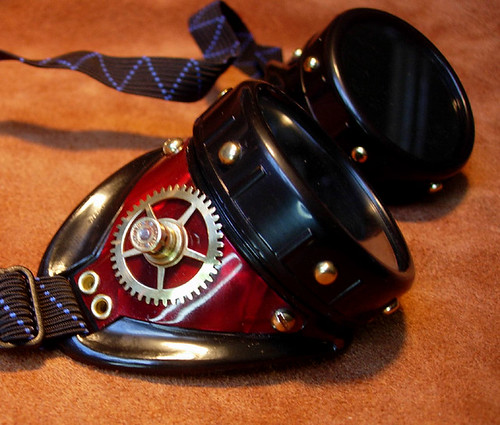
However, it seems to me that the prevalent interest in the broader Steampunk audience is more in style. As far as my eyes can tell, most Steampunk enthusiasts focus on sticking bits of gears onto just about anything, regardless of whether or not the gears serve any function. To me, that's sortof the opposite of what the Steampunk movement is about, I understand that gears, brass and leather all look great together, I love that look, but I think that it's an insult to steam machines to tack mechanical elements onto things for looks. Old steam machines are about the most efficient use of energy and material. I mean, look at THIS! Smooth fluid movement, not a part wasted, nothing aesthetic, just efficiency! That is what Steampunk is, a celebration of design, of human ingenuity, and top hats!
EDIT: At the request of a reader, I slapped together some picture of my preferences on steampunk! Check that out HERE.
Wednesday, June 8, 2011
Fixing School Libraries.
 I've spent a couple of days now over the last couple of weeks working with my mother at the library where she works. It's an elementary school library, which means that at the end of the year, most of the work she is doing is handling, cataloging, and storing textbooks. What I've realized while I was helping her is that the entire textbook system is completely ridiculous, and needs to be re-vamped. My brother has written on the subject of the broken education subject HERE, and while I agree that incorporating games into the curriculum is a great way to encourage students to learn, I think that starting with the books they are learning from is the way to go about fixing education. So, here I go.
Next week, Google is launching its Chromebook, a laptop based on the new Chrome OS. I've been using a Chromebook to update this blog since I started it, and today, it gave me an idea for a complete new infrastructure for books. The basic idea is that Chromebooks operate entirely in the cloud, using only the internet to do its work, rather than depending on built in storage space.
Every year, the library spends more than $200 per student on textbooks. Now, let's imagine that rather than spending that money every year, the school invested it into Chromebooks, which cost about $200 each. The laptops would be bar coded, inventoried, and checked out, exactly the same as the textbooks, but the secret is that the books would be designed specifically for the purpose of education. Every Chromebook is designed to link to a central server on campus, and on that server is the entire curriculum, every textbook is digitized, the workbooks are webpages, the homework comes in emails, and multiple choice grades itself. Students would keep their laptops through the course of the year, charging them in class, and if the teacher requires it, using their 8-hour battery overnight for homework time. The Chromebooks are designed with built-in 3G connectivity, which means that students who cannot afford internet at home could register for the 3G through the schools, so they could do homework.
Two years ago, the elementary school upgraded it's math curriculum, to the latest standards. (I'll talk about the quality of the standards another time) The school had to buy entirely new books for every student they had. If, however, they were using Chromebooks, all the curriculum update would take is the installation of new software on the central server, saving literally tons of paper every time the curriculum is updated. On top of that, the next year, the publisher told the school district that the math they had used for the year wasn't the right set, and sent them an entirely new set of papers! That's another ton of paper wasted, as well as more trouble for librarians! With Chromebooks, if there was a mistake like that, The solution would waste, at most a case of CDs, and at least, nothing, because the update could come over the internet, just like updates on any program on your computer.
A lot of people worry about students (especially elementary age) being on the internet. That's entirely reasonable, but the Chromebook can be developed to have network controls to keep students on a safe-network, so that the computer can only connect to the school's server. Or, pending parent sign-off, etc. the book could be allowed onto the full internet, or have various levels of parental control allowed.
Another interesting aspect of the Chromebooks is the centralized login. To log on to Chrome OS, you enter in your Gmail address and password, and all of your information is linked to that. For this system, the students (and teachers, staff, etc.) would each have a login account, which would store grades, homework, bookmarks (literal bookmarks in the e-books, for example) it could have links to a student's favorite educational games attached to the account, or a list of reminders on the home page for upcoming events, or homework. The real advantage of this is that without having to have the student's actual laptop, the parents or teacher of that student can look it up from literally anywhere that there is internet, regardless of whether or not they were using a Chromebook. Students could also use their home computers to do their homework, if one is available. On the other side of that coin, since every laptop is identical, and can all use the same accounts, if a student forgets (or "forgets") their Chromebook at home, the teacher can simply have a few spare laptops in the class. The students can log in and do their work anyway.
Now, I'm not saying that libraries should be abolished, or that all books should be burned, or anything silly like that. Rather, I'm suggesting that we ditch the business model of replacing books every two years, and only buy books that have a genuine lifespan. If we focused on a system that is built to last rather than being recycled (or sometimes thrown away) every two years, we can focus on the education, and not the money-making. The budget required for books would be cut in half (there would of course need to be some laptops replaced each year) and all of that money could be spent on other things, like after school programs, or art supplies. The Chromebook cloud computing system could make our schools more efficient, less expensive, and more fun for students, and who wouldn't want that?
Tuesday, May 3, 2011
The Sky Boom!

I realize that this picture is neither incredibly exciting, nor clear, and yes, that is definitely my thumb, but what you are looking at is an awesome rig I built for watering my garden, and I am going to teach you how to make one!
Imagine a crane that follows you around your garden, but instead of a cable for lifting weight, the crane has a hose attached to it that lets you water your entire garden without fighting the hose. That is the SkyCrane. last year, we put soaker hoses through the entire garden, one in each of the raised beds. Unfortunately, the soaker hoses decided that one year of soaking was enough, and that from now on they are Spraying, leaky hoses. Obviously, I needed to find an alternative, so I decided to run a hose and water my plants by hand. It would give me a chance to get in there and notice the plants individually, and since I already had a garden hose, it wasn't going to cost anything. Perfect!
Then I tried lugging the hose through the garden, around the corners, and getting snagged on just about everything. That wasn't going to work for me. It was about then that I invented (okay, maybe I stole the idea from a self-serve carwash, but it definitely has a cooler name now) the SKYCRANE! (yes, I know, the skycrane is a heavy-lifting helicopter, but my nephew thinks the name is cool, so we're going to go with it.)
SO! Here, essentially, is what the Skycrane is: a T-shaped boom made out of lightweight fence-pipe, a set of counterweights, and a hose wrapped to the end, all supported by a fence post on the edge of the garden. It was incredibly simple to make, taking only about twenty minutes to put together, and because I built it out of scrap from around the yard, it was completely free.
Since I am not entirely convinced that my description is concise enough for you, I present a very technical digram rendered in exquisite detail:
Hopefully that clears everything up, but if not, be sure to post any questions in the comments section, and I will answer them ASAP. Hope you like it!
Then I tried lugging the hose through the garden, around the corners, and getting snagged on just about everything. That wasn't going to work for me. It was about then that I invented (okay, maybe I stole the idea from a self-serve carwash, but it definitely has a cooler name now) the SKYCRANE! (yes, I know, the skycrane is a heavy-lifting helicopter, but my nephew thinks the name is cool, so we're going to go with it.)
SO! Here, essentially, is what the Skycrane is: a T-shaped boom made out of lightweight fence-pipe, a set of counterweights, and a hose wrapped to the end, all supported by a fence post on the edge of the garden. It was incredibly simple to make, taking only about twenty minutes to put together, and because I built it out of scrap from around the yard, it was completely free.
Since I am not entirely convinced that my description is concise enough for you, I present a very technical digram rendered in exquisite detail:
Hopefully that clears everything up, but if not, be sure to post any questions in the comments section, and I will answer them ASAP. Hope you like it!
Subscribe to:
Posts (Atom)